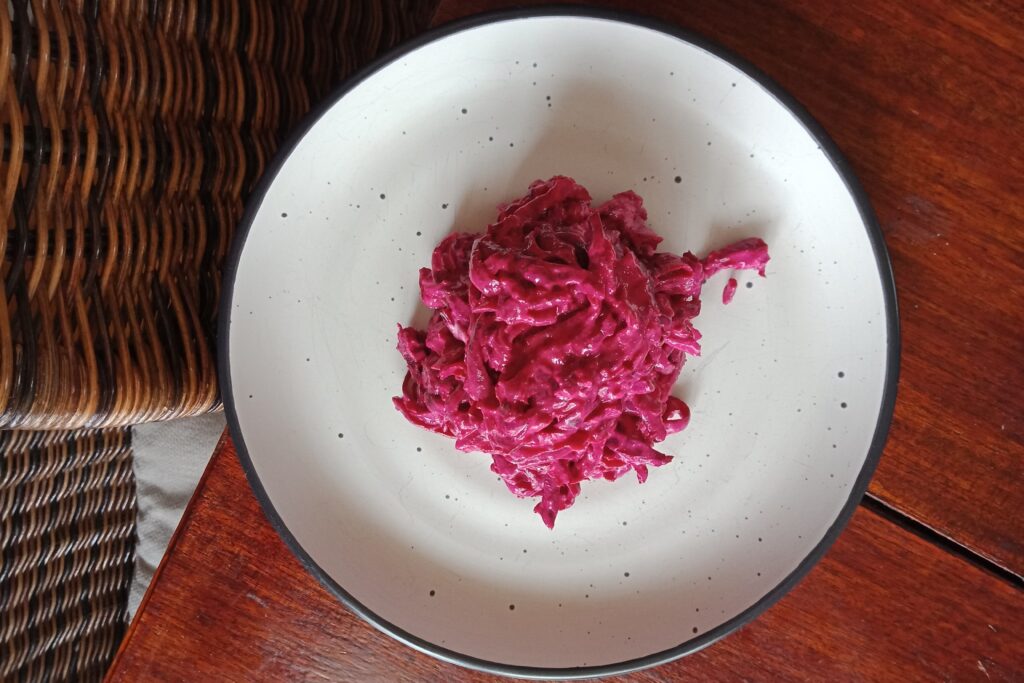
There are two kinds of people, those that love beetroot, and those that haven’t tried the right beetroot recipe yet. This Russian Beetroot Salad will prove that.
This one is for your friends that think they hate beetroot. I would like to say that it has converted my beetroot hating friends, but truth be told, we love it so much that it never makes it onto their plate. In my house, this salad is gone the second it is made.
I’ll get straight into the full recipe below after the brief introduction, so that you don’t have to scroll down to get the details.
However, after the Russian Beetroot Salad recipe there are tips and variations that are worth reading, so make sure to check them out.
It is worth noting that beetroot is lethal and anything it touches will instantly turn purple. If you’ve never worked with beets before, really watch yourself. There are some tips in the notes section below and I recommend having a look at them before you start!
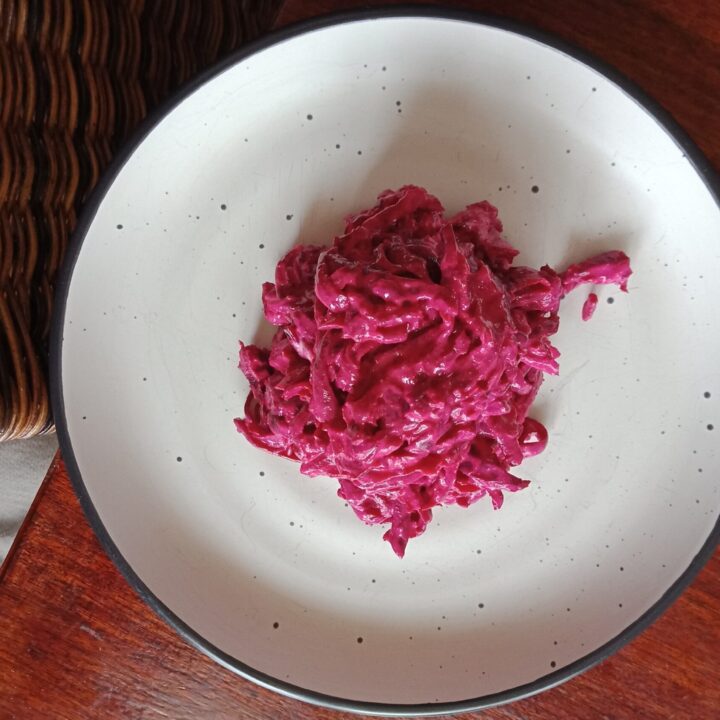
Russian Beetroot Salad
Ingredients
- 1 kg beetroot (whole and unpeeled)
- 1/3 cup European style whole egg mayonnaise
- 2 cloves of garlic
Instructions
- Rinse your beetroot in the sink, then place in a large pot. Cover with water and bring to the boil, then reduce the heat and simmer for 45 minutes.
- To test if it is cooked, insert a knife into the largest beetroot. If it goes in easily, your beetroot is cooked. If the largest beetroot is cooked, the rest are as well. If there is resistance when you insert the knife, your beetroot is not done yet, and you’ll need to simmer for another 15 minutes then retest with a knife. Once your beetroot is tender, turn off the heat and drain, and leave it in the pot to cool completely.
- Then peel your beetroot. To do this, either use a vegetable peeler, or because the skin has softened from cooking, a knife to gently skim the skin off.
- Grate the beetroot on the coarse (large) side.
- Peel the garlic and either use a garlic crusher, or grate the garlic on the fine side of the grater. Stir the garlic and mayonnaise into the beetroot.
Nutrition Information
Yield 8 Serving Size 1Amount Per Serving Calories 244Total Fat 21gSaturated Fat 3gTrans Fat 0gUnsaturated Fat 17gCholesterol 12mgSodium 272mgCarbohydrates 13gFiber 3gSugar 10gProtein 2g
vegan beetroot salad
To make Vegan Beetroot Salad, follow the above recipe, but instead of whole egg mayonnaise, use either vegan mayo, or 2 tbs of olive oil and some salt to taste.
Sour Cream and Chive Russian Beetroot Salad
To make a sour cream and chive beetroot salad, instead of mayonnaise, use sour cream and add a handful of fresh chives (or 1tbsp of dried chives).
How To Serve Russian Beetroot Salad
Use the Russian Beetroot Salad as a side for any of your savoury dishes. It is creamy, but also zesty because of the garlic and will go with any mains like meat, or tofu or alongside a protein like these Peri Peri Chicken Bites.
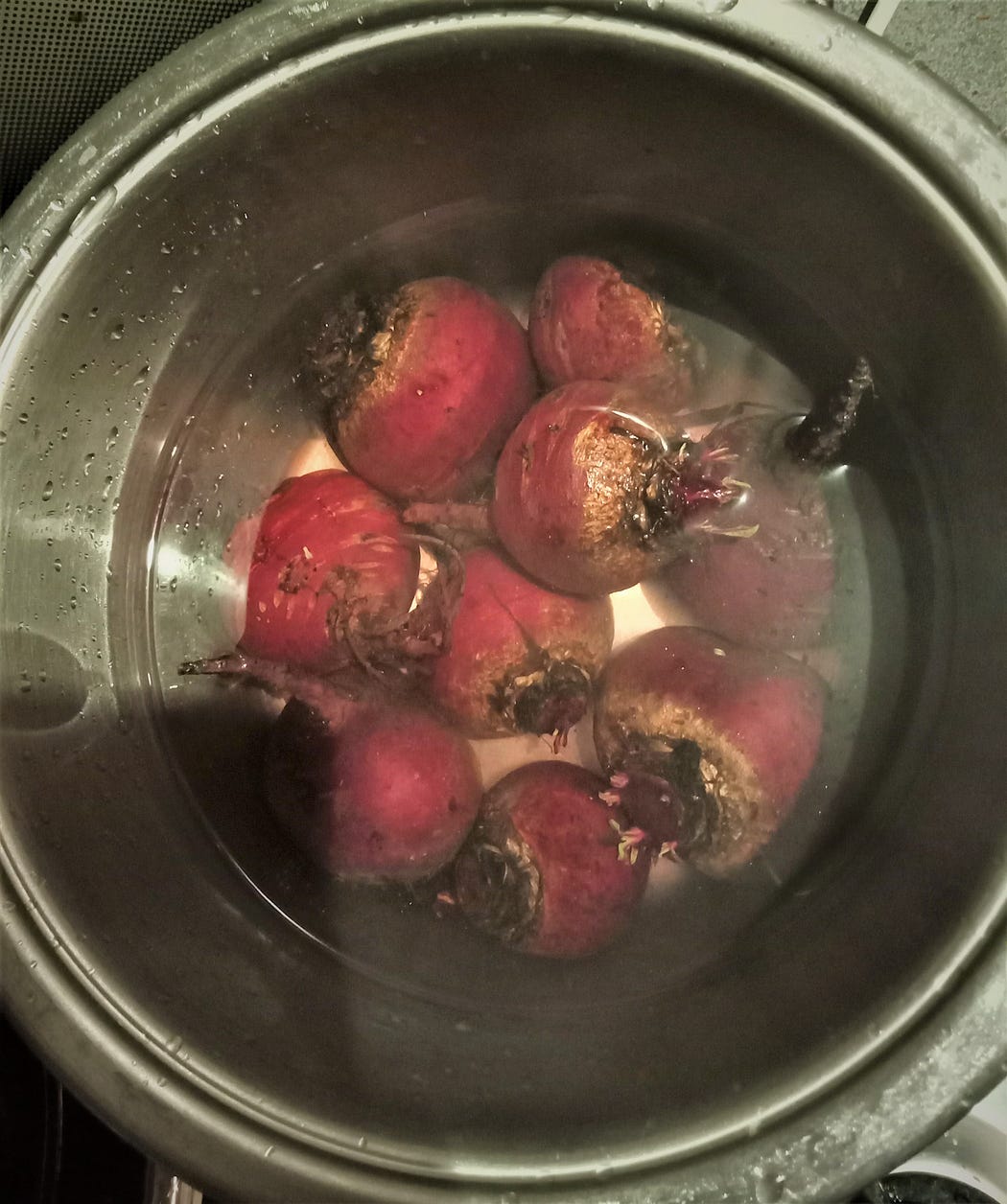
Preparing beetroot: How to keep beets from bleeding
Quick guide to preparing beetroot: how to keep beets from bleeding: treat them as if they are open pots of bright purple paint. In Russia back in the day, young women used to use beetroot on their cheeks instead of rouge. Anything the beetroot touches will be purple, so your hands, clothes, kitchen towels, kitchen floor, surfaces, anything. It’s not too bad while it is raw, but after you’ve cooked it, be very careful to keep beets from bleeding.
Personally I don’t bother protecting my hands when I peel and grate the beetroot, but my hands are purple the rest of that day, then it slowly washes off. I cook a lot and don’t really care about a bit of purple on my hands, but if this would bother you, use gloves.
I cook the beets in a very large pot, then after it all cools down, I use the same pot to peel and grate the beets. The large sides of the pot contain all the colour from the beets (otherwise purple would be splashing all over the kitchen and my clothes). Then I grate the garlic right into the pot too, and add the mayo and mix it right in the pot, and store it in there in the fridge with the lid on. When I want to serve the salad I carefully transfer it onto a serving plate.
If I’ve got beet on my hands and I need to touch something else, I’ll wash my hands well first (or the something else will be 100% purple). While I’m handling beets I don’t touch my face, hair, or literally anything. If any beet drops out of the pot, or onto the floor, it must be cleaned up right away.
The History of Russian Beetroot Salad
The history of Russian Beetroot Salad is rooted in tradition, practicality, and the love of earthy, vibrant flavours, especially those that can withstand long winters. In Russian and Eastern European cooking, beetroot is a staple ingredient, and it plays a starring role in several iconic beetroot salads, most famous in the West are “Vinegret” and “Shuba” (also known as Herring under a Fur Coat).
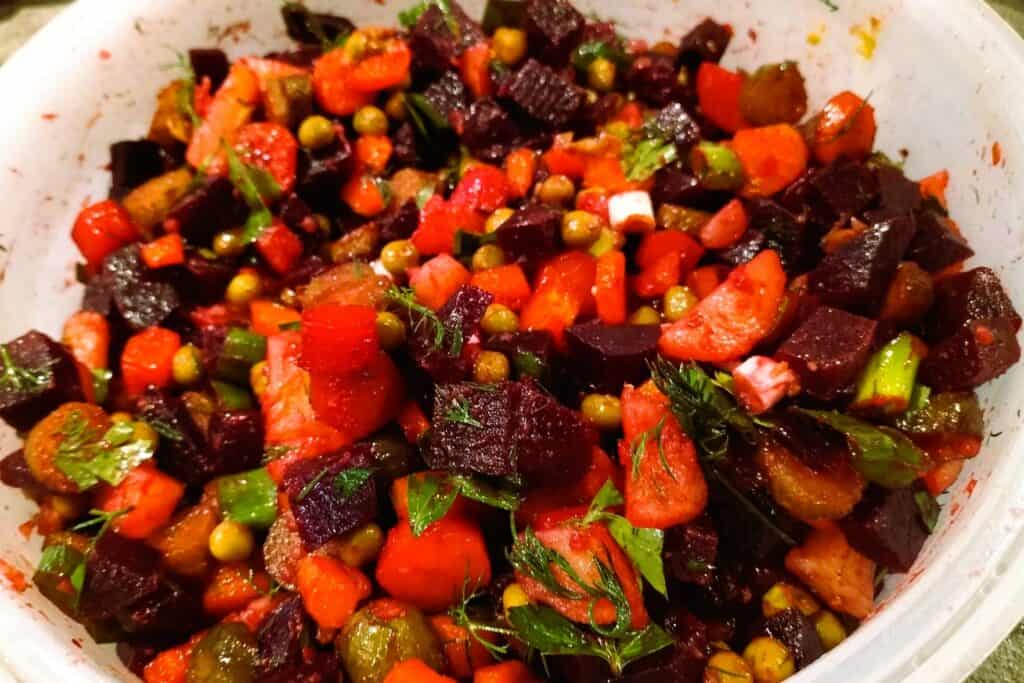
Vinegret (винегрет) is a traditional Russian salad made with boiled beetroot, potatoes, carrots, pickles, spring onion, peas and dill, all diced and dressed with olive oil. Despite the name sounding like “vinaigrette,” the word in Russian refers to this specific salad, not the dressing.
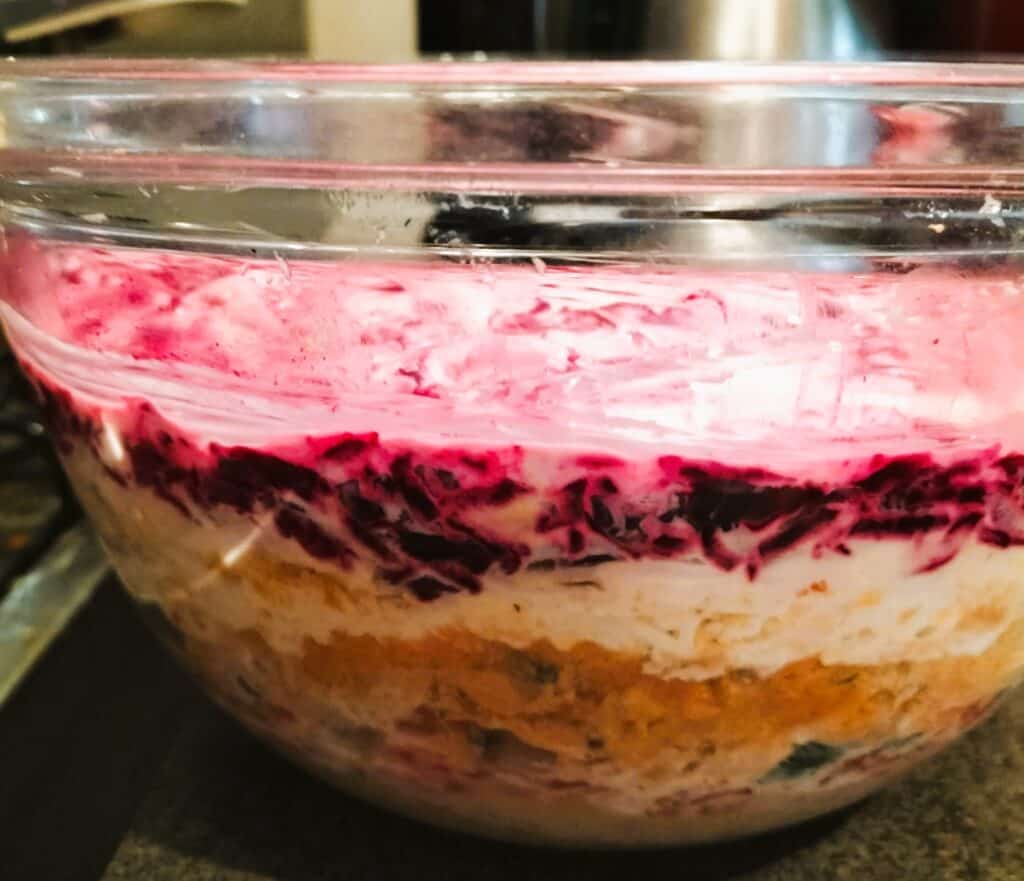
Another famous beetroot based Russian salad is Shuba (селёдка под шубой), which translates to “herring under a fur coat.” This layered salad features pickled herring, boiled potatoes, carrots, beetroot, and mayonnaise, and hard boiled eggs, all grated and all served in layers which makes it quite striking especially when in a glass bowl. It became a New Year’s Eve favourite in the Soviet era and remains a beloved dish for special occasions. Pickled herrings are not everyone’s favourite, and can be hard to find, so when I make it these days I like to use canned salmon instead (remember to sprinkle it generously with salt or it can be a bit bland).
Vinegret became widely popular in the 19th century, likely influenced by French cuisine (where vinaigrettes were common), but adapted to local ingredients and climate. It was an ideal dish for Russian households because it used ingredients that were cheap, available year-round, and preserved well in cold weather. It’s colourful, healthy, and suitable for both everyday meals and festive tables, especially during Orthodox fasting periods when meat and dairy are avoided.
This lesser-known Russian Beetroot Salad that we are making today, however, is a simple yet flavourful dish made from just three main ingredients: grated boiled beetroot, fresh garlic, and mayonnaise.
It might not have the layered drama of a shuba or the tang of a vinegret, but it’s a household favourite across Russia and former Soviet countries. It’s often served as part of a zakuski spread (a table of small cold dishes), especially during holidays and gatherings. The earthiness of the beetroot, the sharpness of raw garlic, and the creaminess of mayonnaise create a bold, addictive combination that pairs beautifully with hearty mains, rye bread, or even tucked into sandwiches.
This salad is a perfect example of how a few humble ingredients can come together to create something much greater than the sum of their parts. This “plain” Russian Beetroot Salad, is a best kept secret and definitely the best and yummiest of the three.